Research areas
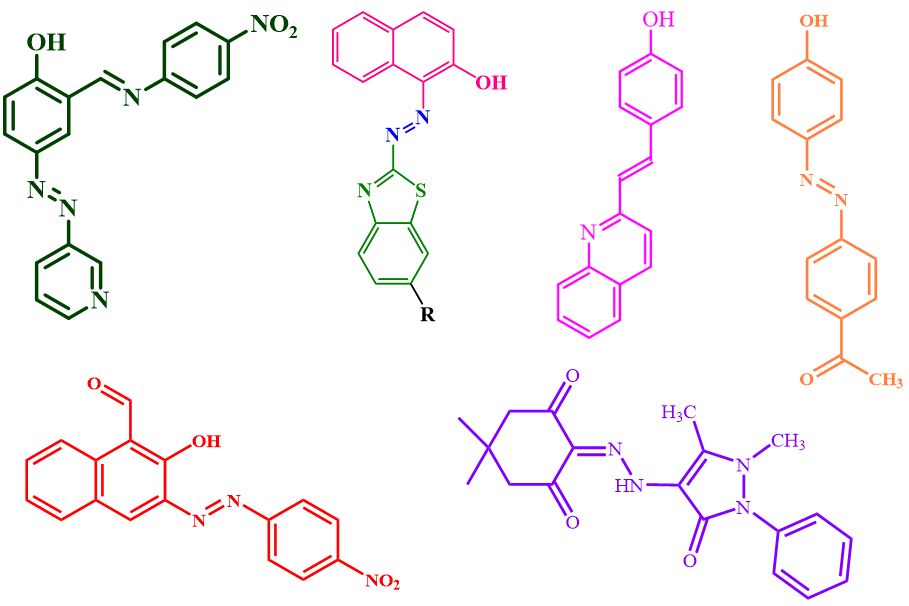
One of the key research areas of our group is the molecular design and synthesis of novel photosensitive organic compounds, including azo compounds, azomethines, azo-azomethines, and spiropyrans. We investigate how the nature and position of substituents, the incorporation of heterocyclic fragments, and the combination of several photoactive groups influence the electronic structure, spectroscopic characteristics, and ability of molecules to undergo structural changes upon light irradiation. This approach enables the targeted development of compounds with tailored spectral ranges, photoisomerization rates, and stable photochemical responses.
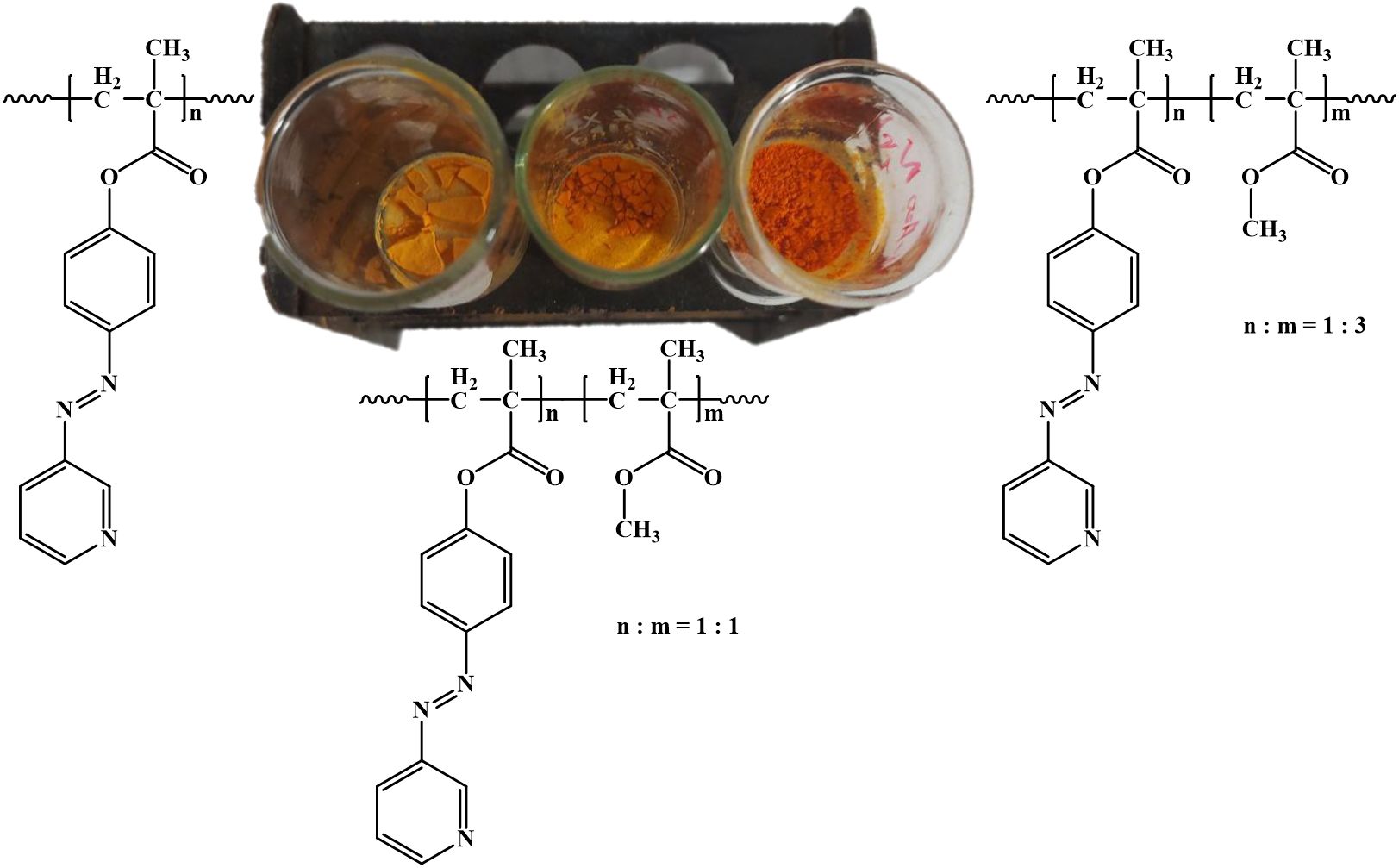
In the group, we develop monomers that contain photosensitive fragments, as well as polymers and polymer composites based on them. After synthesizing a new monomer, we determine its ability to undergo homo- and copolymerization, select the optimal conditions for the reaction, and the ratio with other monomers. We pay special attention to the study of polymerization kinetics, molecular weight characteristics, thermal stability, and composition of the resulting polymers. This allows us to establish a relationship between the structure of the photoactive fragment, the structure of the polymer system, and its functional properties.
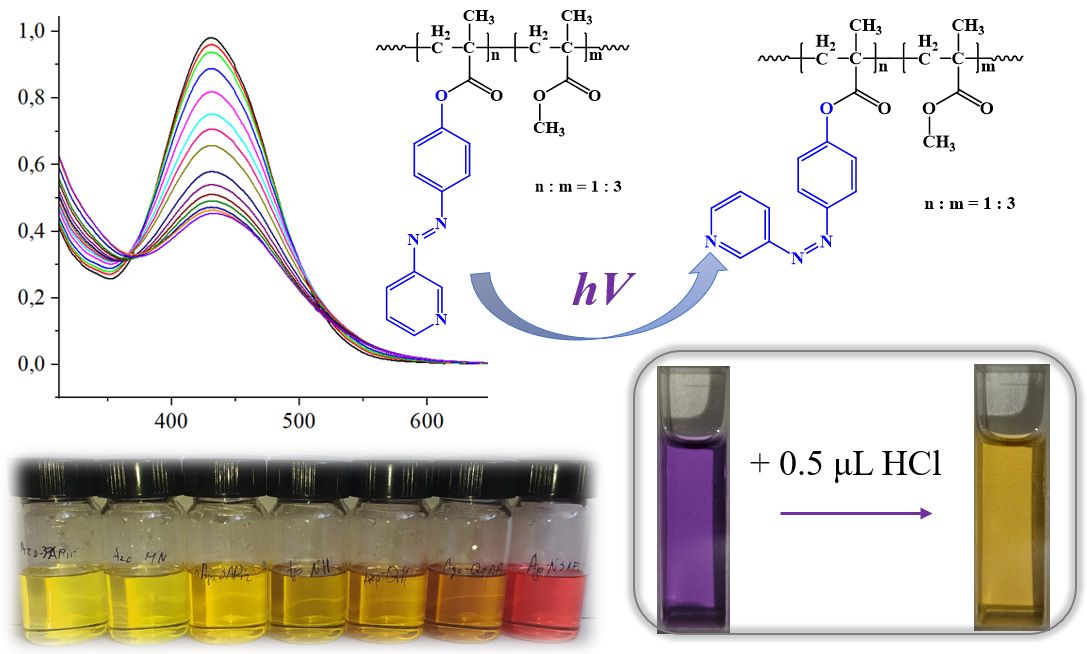
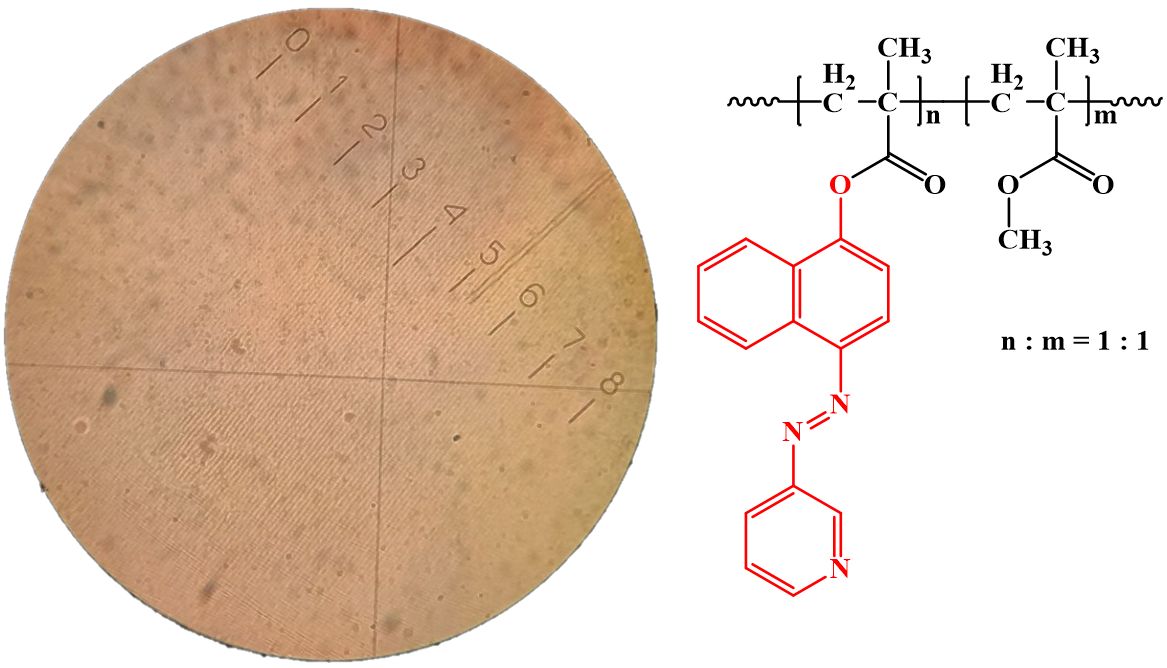
Synthesized compounds and polymeric materials are studied in solutions and thin films. Under the action of light, photoactive molecules can change their configuration, absorption spectra, coloration and optical properties of the material. We study the kinetics of photoisomerization, spectral changes, stability of photochemical cycles and the influence of the polymer matrix on the mobility of photoactive fragments. Particular interest is the photoinduced changes in the refractive index, absorption and surface structure of films, which determine the possibility of practical use of materials in photonic devices.
A promising direction of the group's activity is the creation of polymeric materials for holography and nonlinear optics. Photoactive molecules introduced into the composition of the polymer matrix or chemically bonded to the polymer chain are capable of changing orientation and optical characteristics under the action of laser radiation. We investigate the diffraction efficiency, formation of optical anisotropy, self-influence of the laser beam and nonlinear optical response of polymer composites. The obtained materials are promising for optical information recording, holographic media, photonic switches and controlled optical elements.
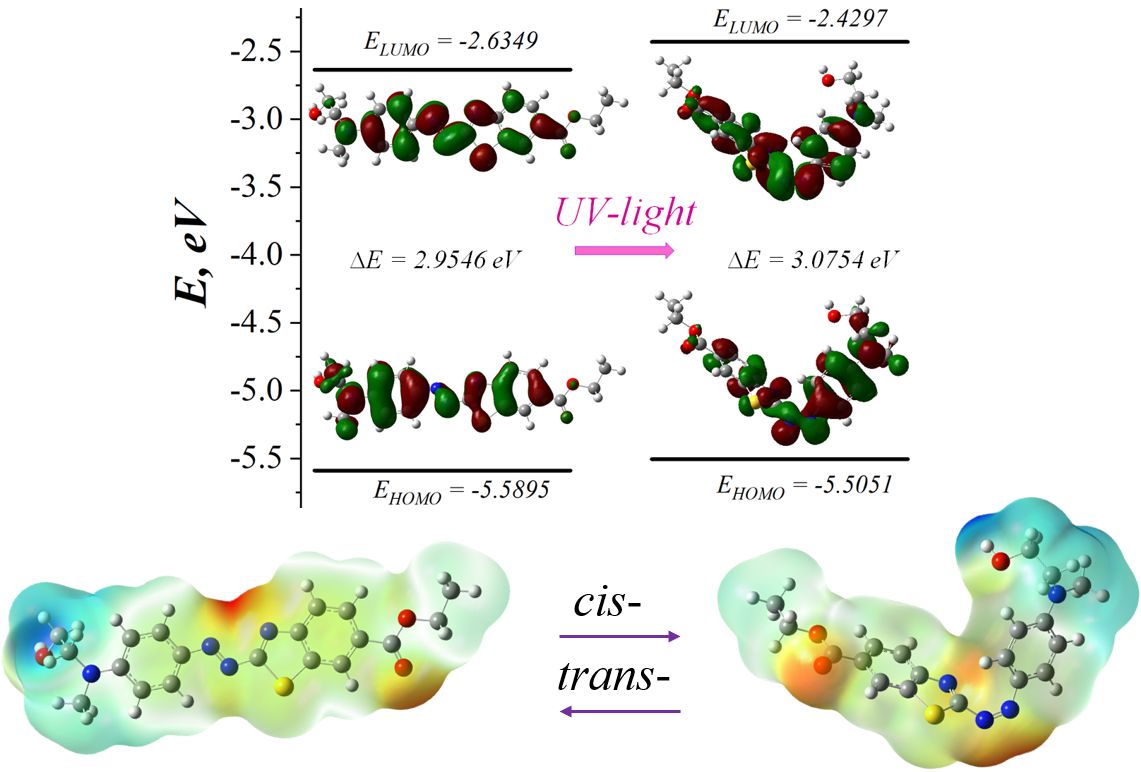
The group's work covers the full cycle of creating a photoactive material: from molecular design, synthesis of compounds and obtaining functional monomers to polymerization, formation of thin films and research of their photochemical, spectral and optical properties. Experimental studies are supplemented by quantum-chemical modeling, which makes it possible to analyze the electronic structure of molecules, the nature of optical transitions, the distribution of electronic density and predict the effect of structural modifications on photo-physical and non-linear optical characteristics of materials. Such a comprehensive approach allows establishing relationships between "structure — properties — functional response" and purposefully creating promising materials for holography, nonlinear optics and photonics.